ENGINEERING BLOG
Real-Time Team Expense and Fund Flow Management System
A full-stack system engineered to simplify shared expense tracking, automate fund distribution, and provide real-time visibility into personal and group financial flows.
- Full-Stack Development
- System Design
- Spring boot
- React
- PostgreSQL
- Real-Time Data Handling
- Financial Modeling


Problem Space
Managing shared expenses within a group introduces ambiguity in tracking who paid, who owes, and how settlements should be calculated. Existing solutions either lack transparency or introduce friction in usage.
A system was implemented to provide deterministic tracking of fund flow across individuals while maintaining simplicity in user interaction.
System Concept
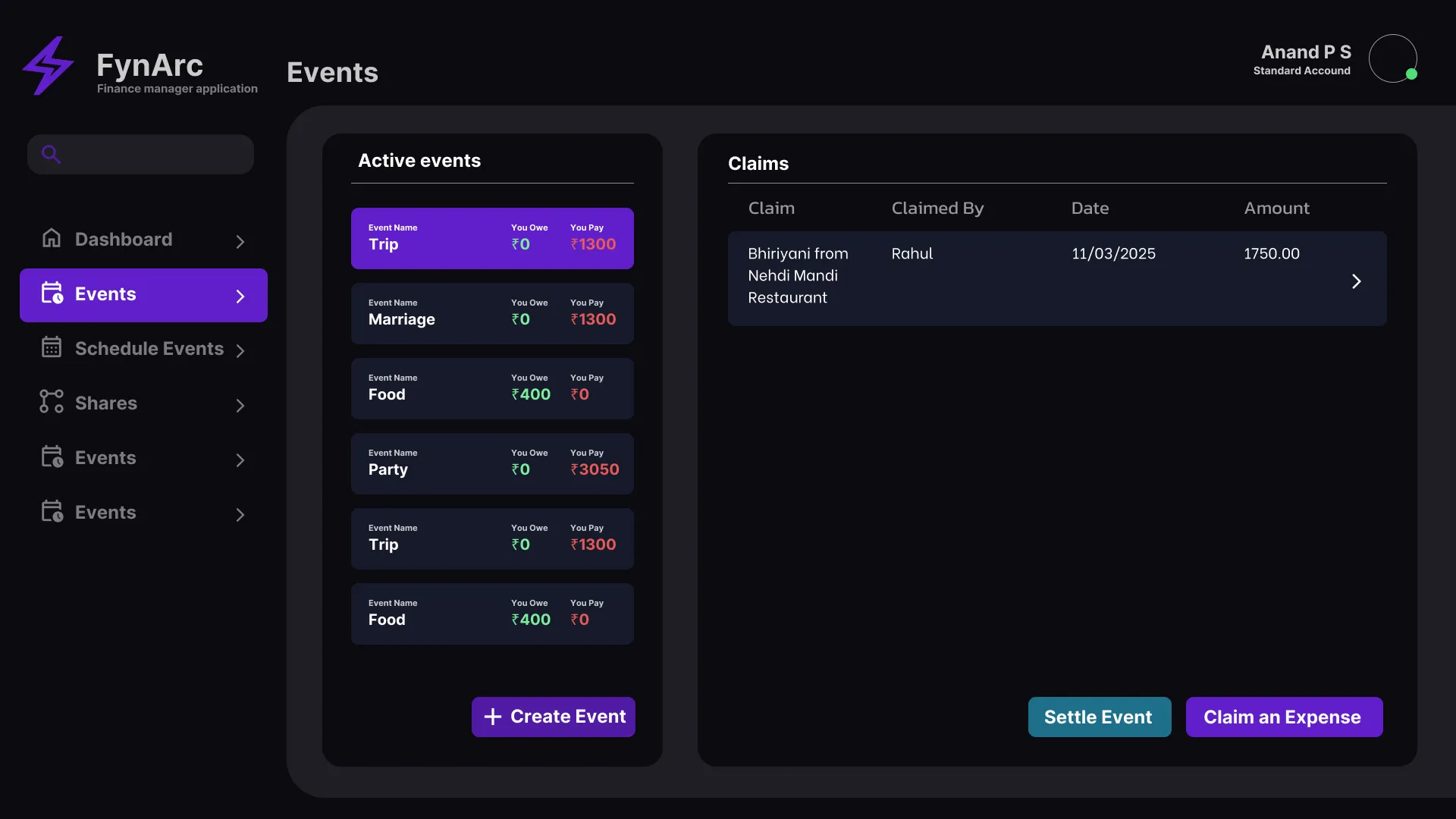
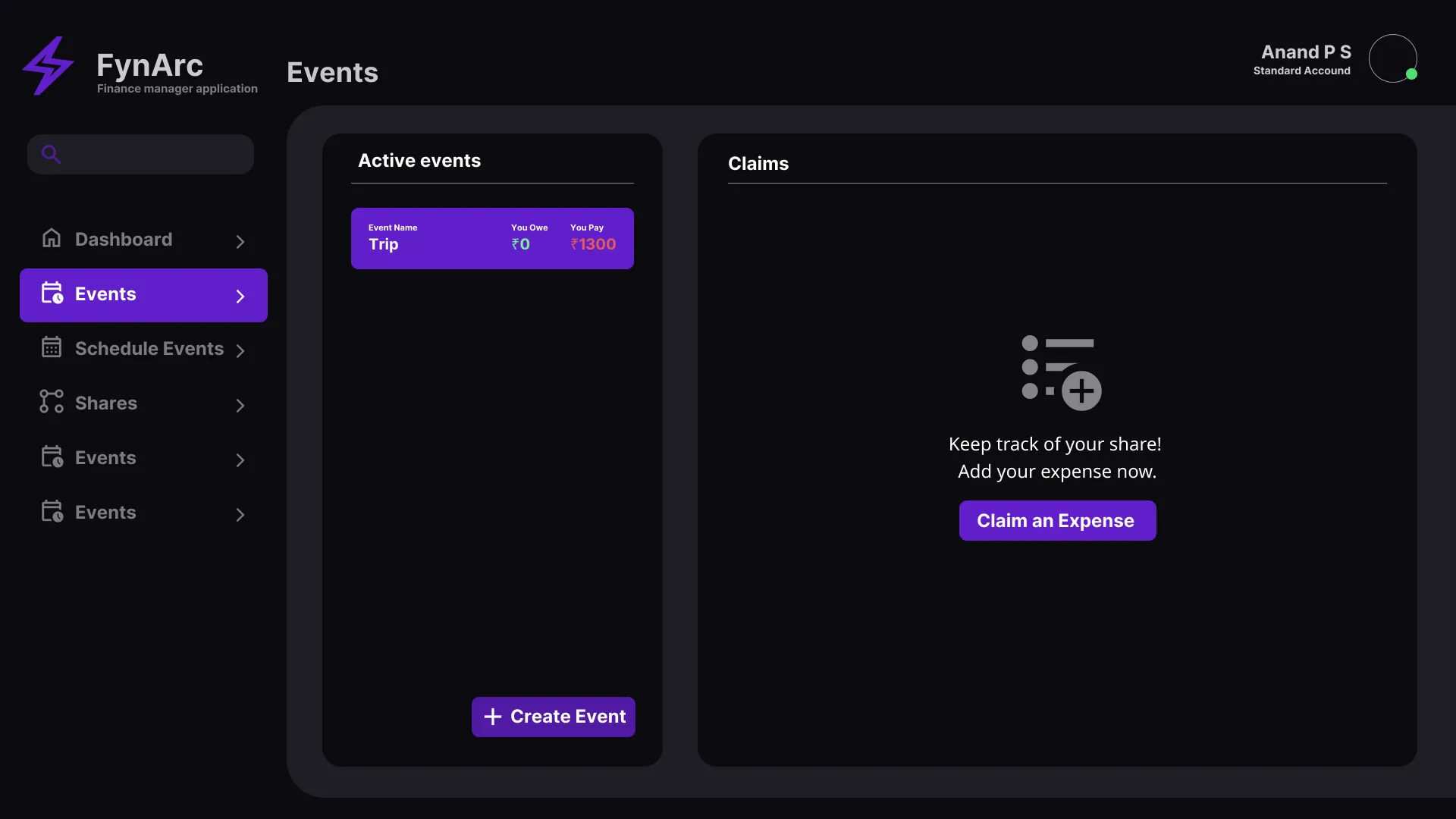
The system is built around event-driven financial grouping, where each event represents a shared expense context such as trips, parties, or team activities.
- Event-based expense isolation
- Participant-level tracking
- Real-time balance computation
- Clear settlement pathways
Core Workflow
The system follows a structured interaction flow:
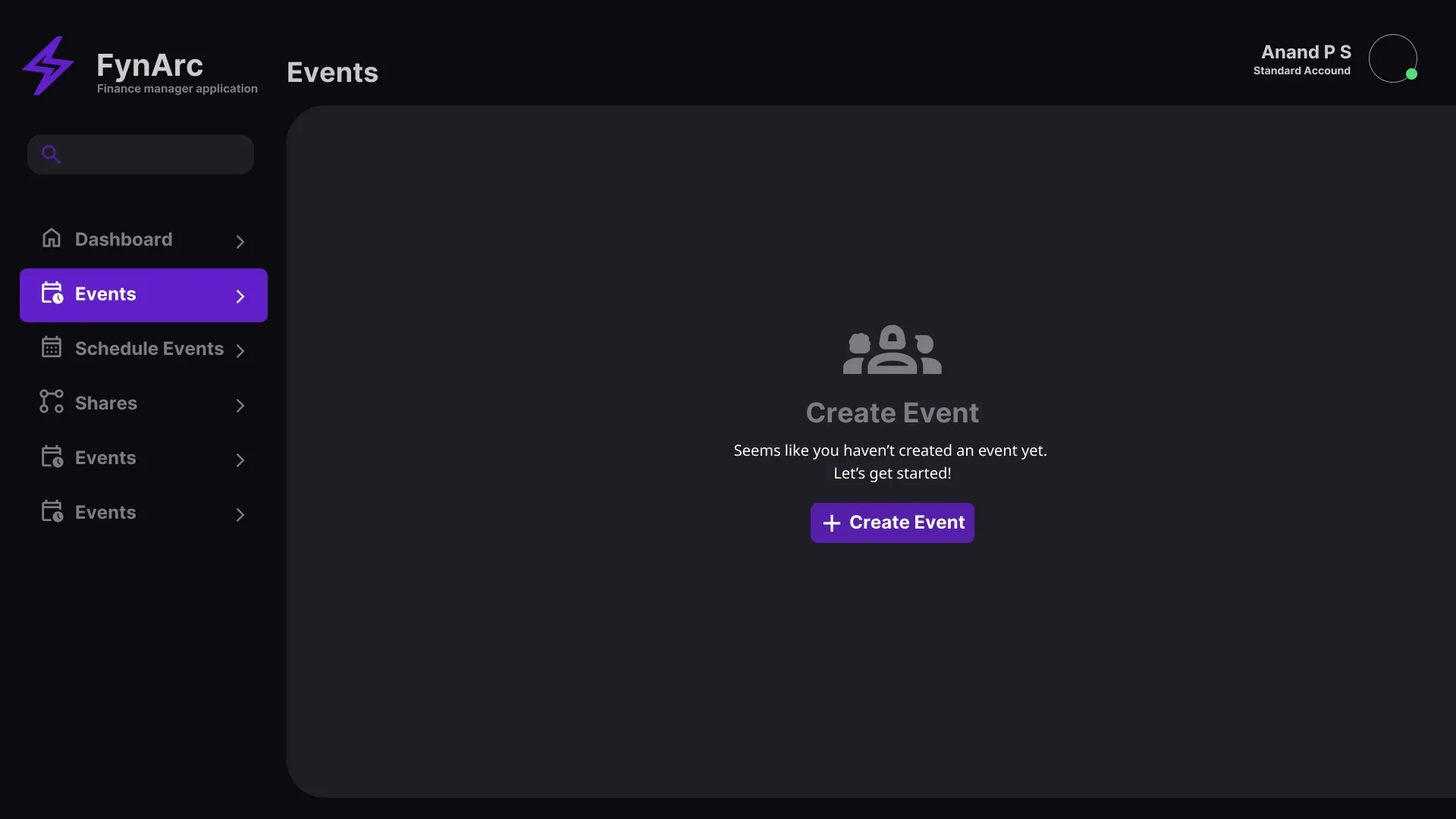
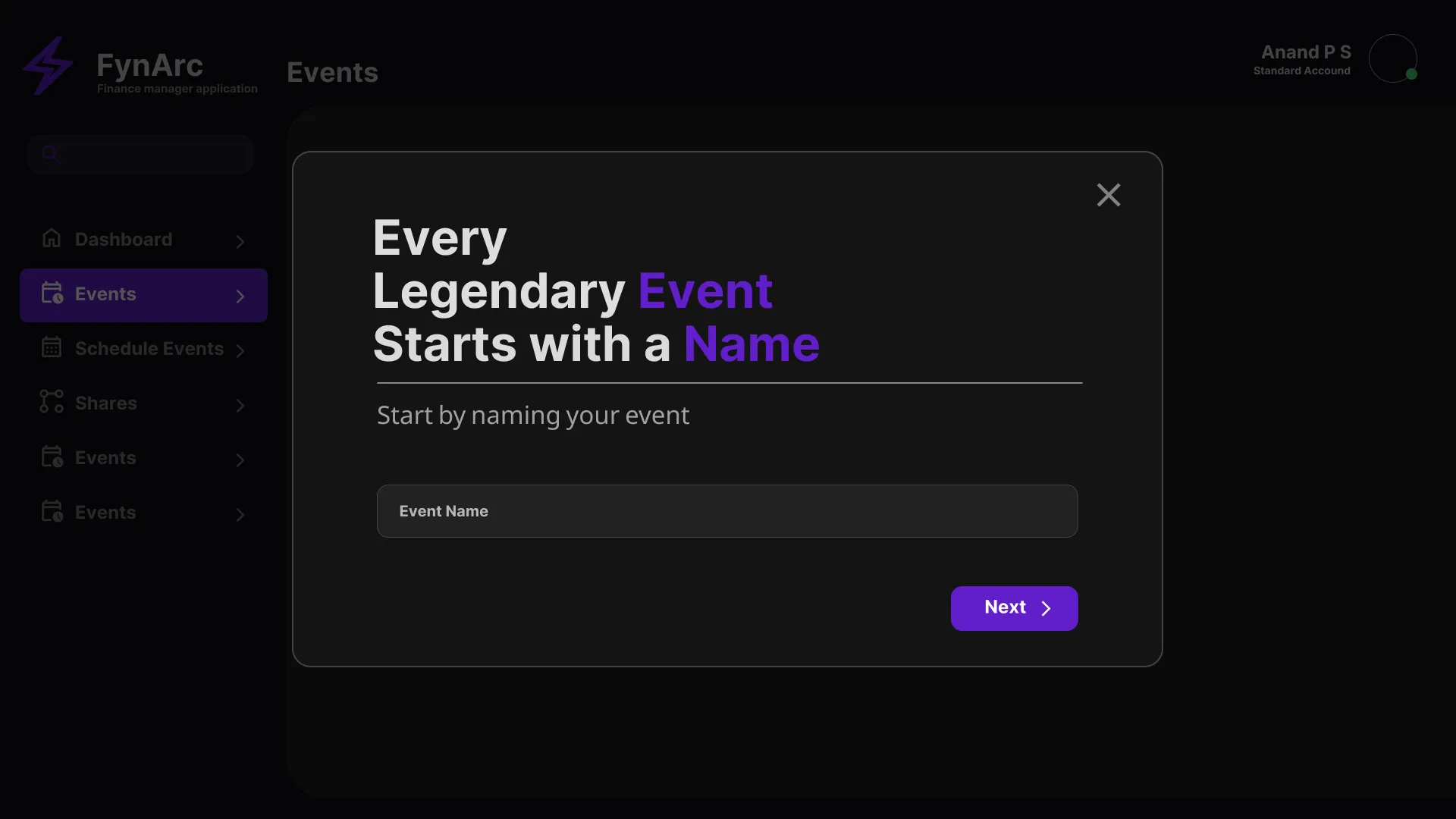
- Create event → define context
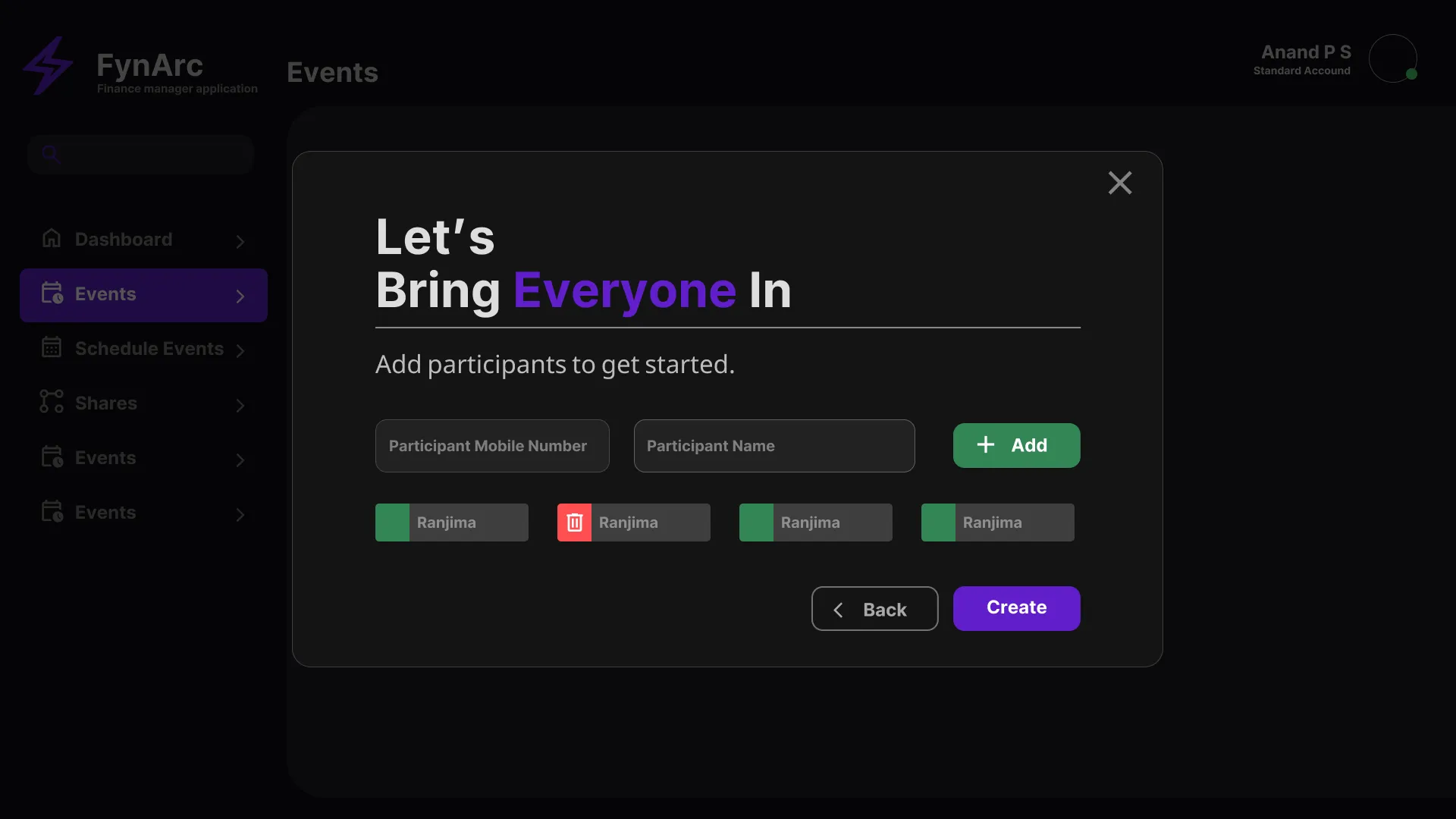
- Add participants → build group
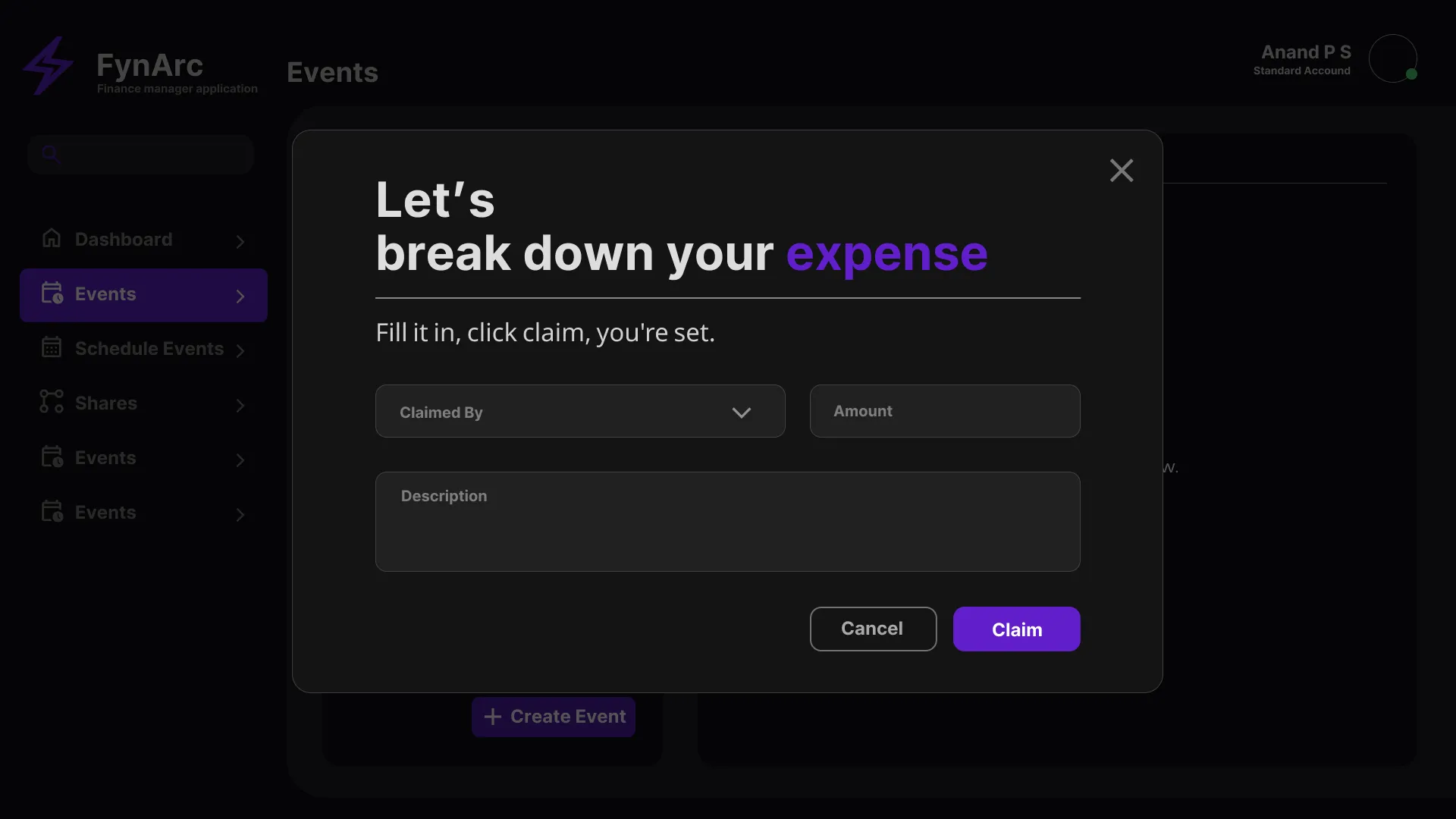
- Log expenses → assign claimant
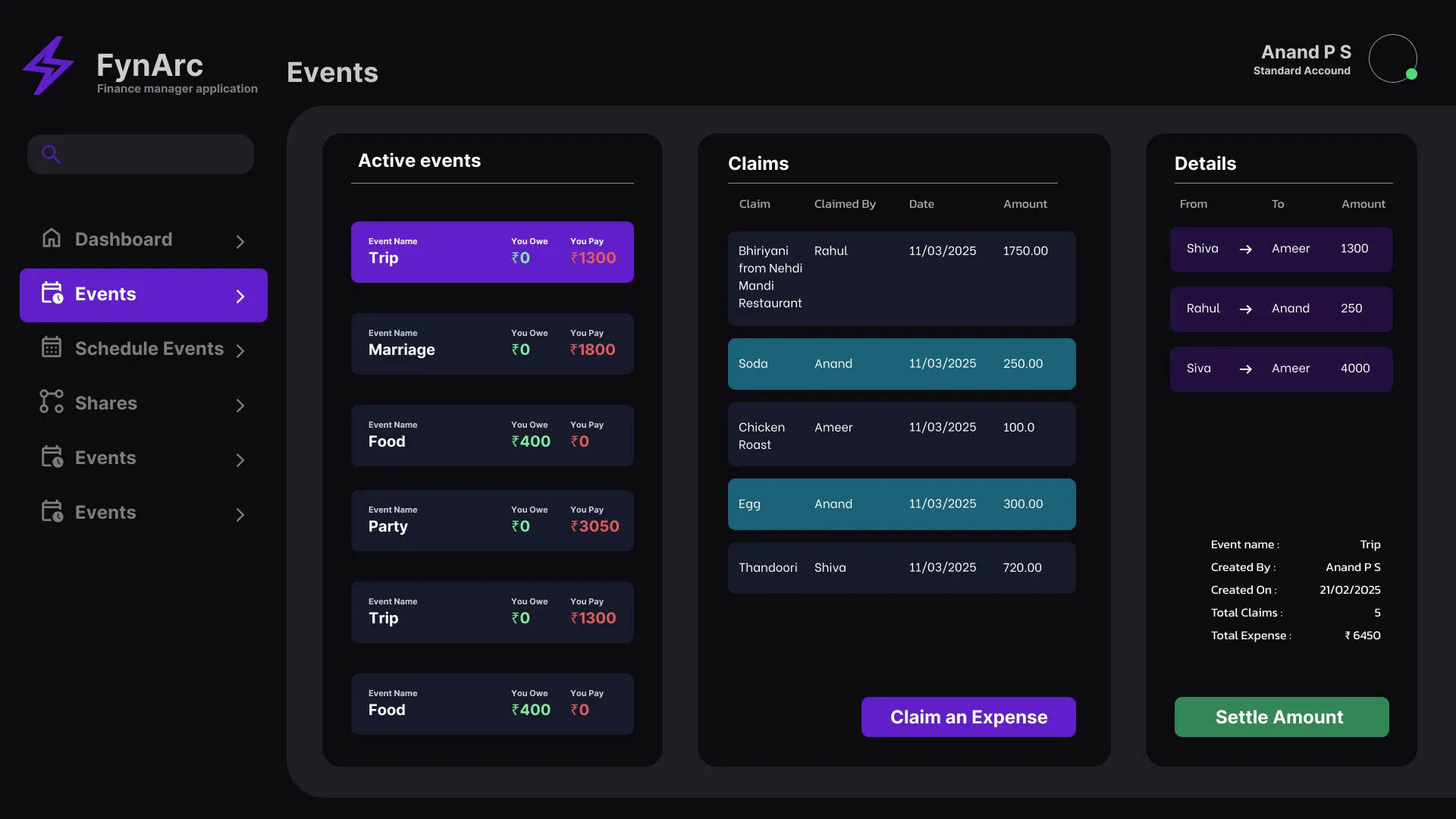
- System computes balances → who owes / who gets
- Settlement execution → close financial loop
Each stage is optimized to reduce cognitive overhead while maintaining accuracy.
Financial clarity is not about tracking more data, but structuring it correctly.
System Architecture
The system is implemented as a full-stack application with clear separation of concerns:
- Frontend: React (TypeScript) for interactive UI and state-driven rendering
- Backend: Java 21 (Spring Boot) for API orchestration and business logic
- Data Layer: PostgreSQL for relational data modeling and transactional integrity
The architecture ensures consistency between user actions and financial state transitions.
Data Modeling
The system models financial interactions at three levels:
- Event: Context container for expenses
- Participant: Entity involved in the event
- Claim: Individual expense entry
Relationships are maintained to ensure accurate computation of balances across all participants.
Computation Logic
The core engine computes:
- Total expense per event
- Individual contributions
- Equal or rule-based distribution
- Net payable / receivable per user
This enables instant visibility into financial positions without manual calculation.
User Experience Design
The interface is designed for rapid interaction:
- Minimal steps for event creation
- Quick participant onboarding
- Single-action expense claiming
- Visual indicators for balances
The system minimizes friction while maintaining accuracy in financial tracking.
Real-Time Visibility
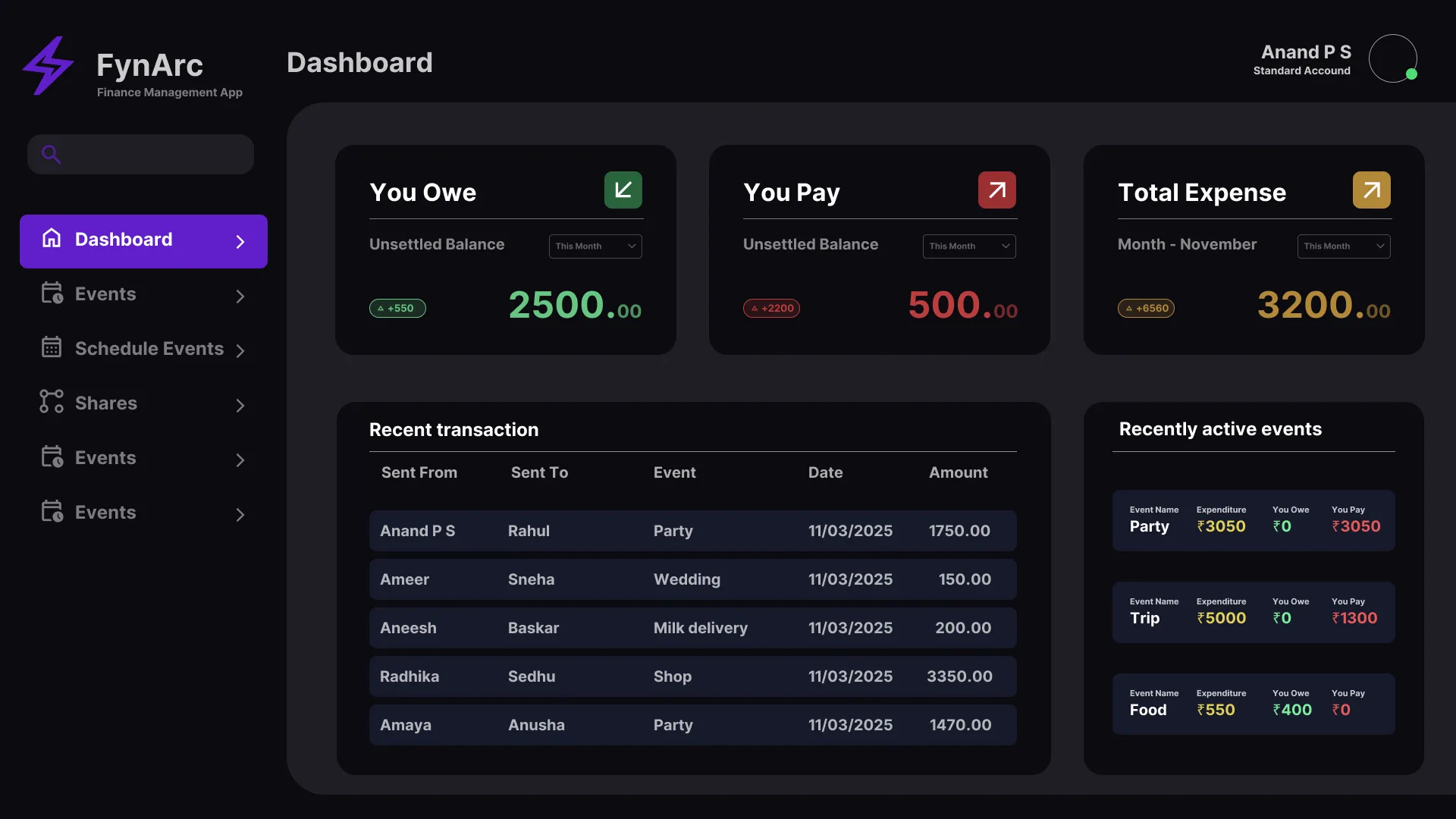
The dashboard provides:
- Total expenses overview
- Individual payable and receivable values
- Recent transactions
- Active event summaries
This ensures that users always operate with up-to-date financial data.
Outcome
A complete financial interaction system was designed, implemented, and validated. The platform enables seamless management of shared expenses while maintaining transparency and computational accuracy.
The system demonstrates capability in full-stack engineering, financial data modeling, and real-time system design with production-oriented constraints.